
Storm-Damaged Shingle Roof Replacement in Carteret, NJ
Carteret · Residential · Architectural asphalt shingles
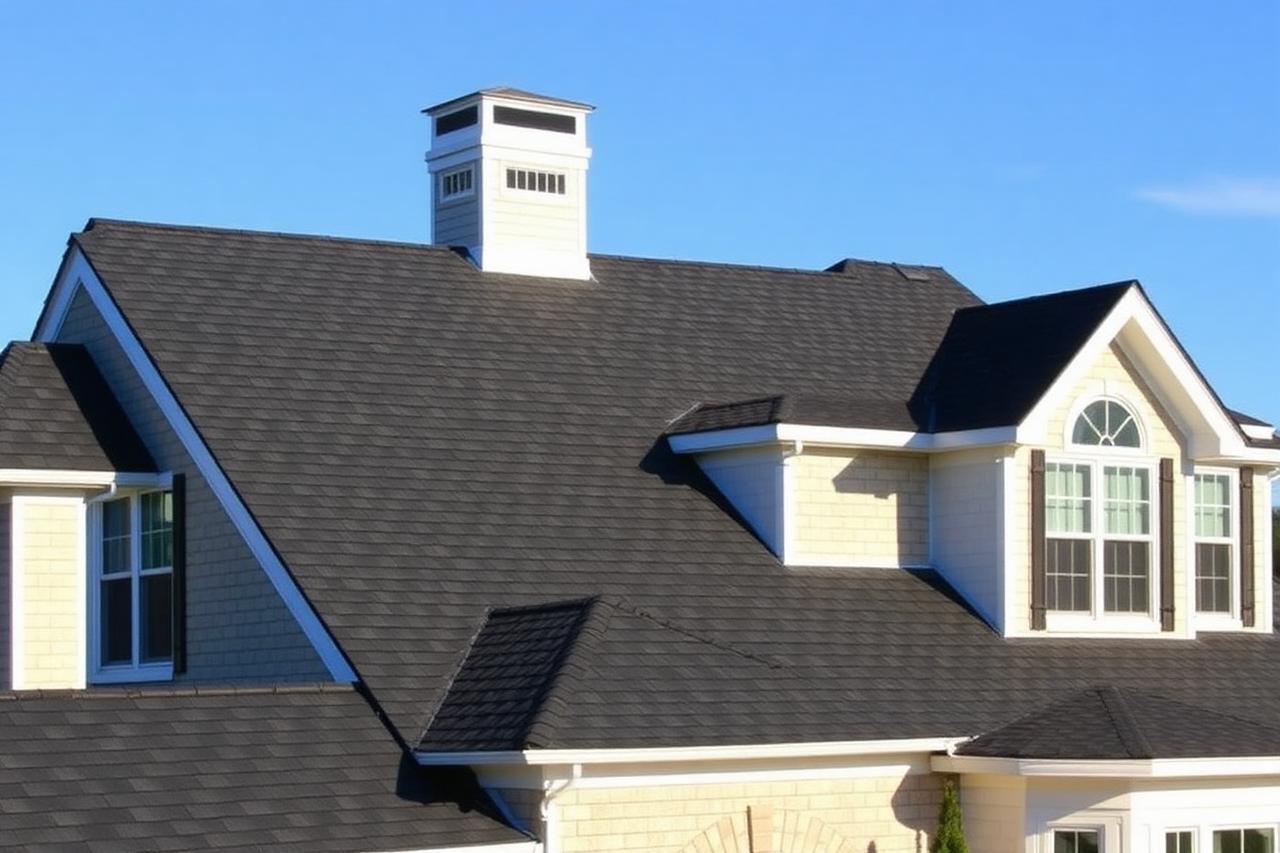
A full tear-off and replacement of a wind-damaged asphalt shingle roof on a two-story Carteret colonial, including deck repairs, ice-and-water shield at the eaves and valleys, and a balanced ridge-vent intake and exhaust system.

The problem
After a line of summer thunderstorms moved across Middlesex County, the homeowner found shingle tabs in the yard and a brown stain spreading across a second-floor bedroom ceiling. The roof was an original three-tab asphalt system approaching the end of a normal 20-year service life, and it had already been patched twice in previous years. The concern was not just the immediate leak — it was whether a third patch was worth paying for on a roof that had lost granules across most of the south-facing slope. That is the question we answer with an inspection rather than a sales pitch: if the field of the roof still has life in it, we repair, and if it does not, we say so and show why.
What the inspection found
- — Roughly forty shingle tabs missing or creased along the windward slope, with exposed nail heads on adjacent courses
- — Heavy granule loss across the south slope, with granules collected in the gutters and at the downspout outlets
- — Two sheets of roof decking soft to the touch near the rear eave where water had been entering behind a failed drip edge
- — No ice-and-water shield at the eaves — original felt underlayment only, brittle and torn at several fastener lines
- — Attic ventilation limited to two static vents with blocked soffit intake, producing high summer deck temperatures that had accelerated shingle aging
What we did
We tore the roof off to the deck rather than laying a second layer over a failing one, which lets us see the sheathing and keeps the assembly at a single, warrantable layer. Two compromised sheets of plywood decking were replaced and the surrounding fasteners re-set. Ice-and-water shield went down along every eave, in both valleys, and around the chimney and plumbing penetrations; synthetic underlayment covered the balance of the deck. New aluminum drip edge was installed at the rakes and eaves, with step flashing replaced rather than reused at every wall intersection. The field was finished in architectural asphalt shingles with a matched hip and ridge cap. To fix the underlying heat problem, we cleared the soffit intake, added baffles at the eaves so insulation could not choke the airflow, and cut in a continuous ridge vent sized to the attic square footage.
Materials: Architectural asphalt shingles (30-year class), Ice-and-water shield at eaves, valleys, and penetrations, Synthetic underlayment, Aluminum drip edge and new step flashing, Continuous ridge vent with soffit intake baffles · Duration: 2 working days
The result
The ceiling stain was cut out and the leak path eliminated at its source rather than sealed over. With intake and exhaust ventilation balanced, attic temperatures drop sharply in summer, which is the single biggest factor in how long an asphalt roof in New Jersey actually lasts. The homeowner received photographs of the decking before it was covered, the manufacturer's warranty registration, and a written record of the work performed for insurance and resale purposes.