Residential roofing · New Jersey
Roof Repair in New Jersey
A roof repair is only worth paying for if it addresses the thing that is actually failing. A surprising number of the repairs we are called to redo were competent work applied to the wrong part of the roof — sealant at a stain's location instead of at the entry point twelve feet uphill.
Our repair work starts with tracing water backwards from where you see it to where it entered.
Problems we repair most often
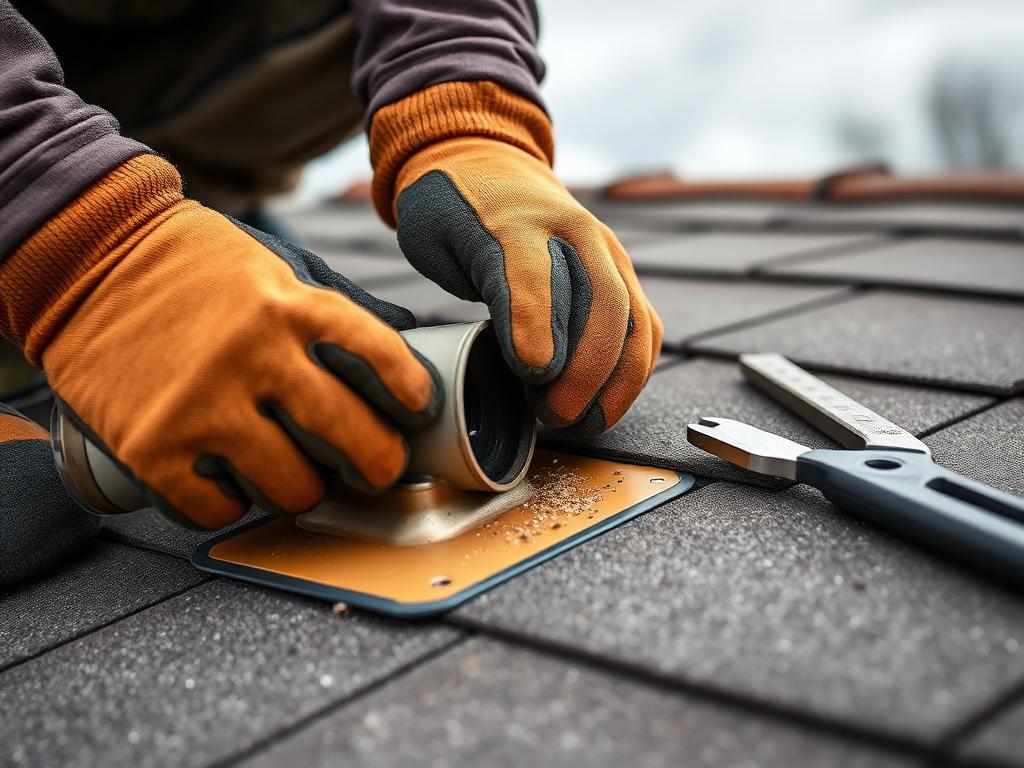
- Cracked or dried-out pipe boot collars, the single most common leak we find
- Step flashing that was face-nailed or sealed instead of woven into the courses
- Chimney counter flashing that was never let into a mortar joint
- Valley failures where debris has held moisture against the metal
- Wind-lifted or creased shingles after a coastal storm
- Skylight curb and head-flashing leaks
- Nail pops that have backed out and punctured the shingle above
- Ridge vent installed without a properly cut slot, or with the slot cut too wide
Watch out
Why this roof failed: the four causes we keep finding
Across the repairs we handle in New Jersey, the underlying cause almost always lands in one of four categories, and none of them is 'the shingles wore out.'
- 1
Flashing shortcuts
Sealant used as a substitute for metal. Caulk has a service life measured in a handful of years; properly lapped flashing lasts as long as the roof.
- 2
Ventilation imbalance
Exhaust without matching intake pulls conditioned air through the ceiling, which condenses on cold decking. Homeowners report it as a leak because it drips like one.
- 3
Ice damming at the eave
Heat loss melts snow mid-slope, the water refreezes at the cold overhang, and the resulting dam pushes water backwards under the shingles.
- 4
Penetrations added after the fact
Satellite mounts, solar standoffs, and bath fan terminations cut in later by other trades and sealed rather than flashed.
How we find the source
- 1
Interior first
We look at the stain, its shape, and when it appears — steady rain, wind-driven rain, or thaw.
- 2
Attic trace
From below, we follow the run on rafters and decking back to the highest wet point.
- 3
Roof-surface confirmation
We inspect that area from above and photograph what we find.
- 4
Water test where needed
On stubborn leaks we isolate the roof in sections with a hose rather than guess.
- 5
Written findings
You get photographs and an explanation of what failed before any work is scheduled.
When a repair is not the right call
We will tell you when repairing is throwing money at a roof that is finished. The signals are consistent: shingles that crack when lifted rather than flex, granule loss heavy enough that the mat shows through, multiple soft spots underfoot, and a third leak in as many seasons on different slopes.
In those cases the repair still works — it just buys a season, and you pay for setup again the next time.
What affects repair cost
- Whether the leak source is obvious or requires diagnostic time
- Roof pitch and how the area has to be accessed safely
- Whether decking under the failure has to be cut out and replaced
- Matching existing shingles, which is harder on discontinued profiles
- Chimney and masonry work, which sometimes requires re-cutting mortar joints
Frequently asked questions
- How quickly can you look at a leak?
- Active leaks get priority scheduling, and we offer emergency stabilization when water is entering the living space. Call (201) 682-1155 and describe what you are seeing so we can triage it correctly.
- Can you repair a roof in winter?
- Yes, with adjustments. Shingle sealant strips will not bond in cold weather, so we hand-seal repairs made below roughly 45°F and return to verify the bond once temperatures come up.
- Will the repair match my existing shingles?
- We match as closely as the product line allows. Weathered shingles never match new stock exactly, and on discontinued profiles we will show you the closest available option before installing it.
- Do repairs come with a warranty?
- Yes — the specific workmanship terms are provided in writing with your estimate for the work being performed.
Get a straight answer about your roof
Tell us what you're seeing and we'll inspect it, photograph it, and explain what it actually needs — repair or replacement.