
Commercial roofing · New Jersey
Flat and Low-Slope Roofing in New Jersey
'Flat' roofs are not flat. They are low-slope, and the entire performance of the system depends on that slope actually moving water to a drain within about 48 hours of a rain.
We install and repair low-slope roofing on commercial buildings and on the residential situations that are extremely common in New Jersey housing stock: rear additions, porch roofs, dormer tops, and row-home roofs.
Residential flat roofs are their own problem
A rear addition with a low-slope roof, tied into a pitched main roof, is one of the most leak-prone assemblies in New Jersey homes. Water from the large pitched slope dumps onto a small low-slope area with limited drainage, and the tie-in detail between the two systems has to handle all of it.
When homeowners tell us the leak is 'somewhere in the back of the house,' this transition is where we look first.
System options for low slope
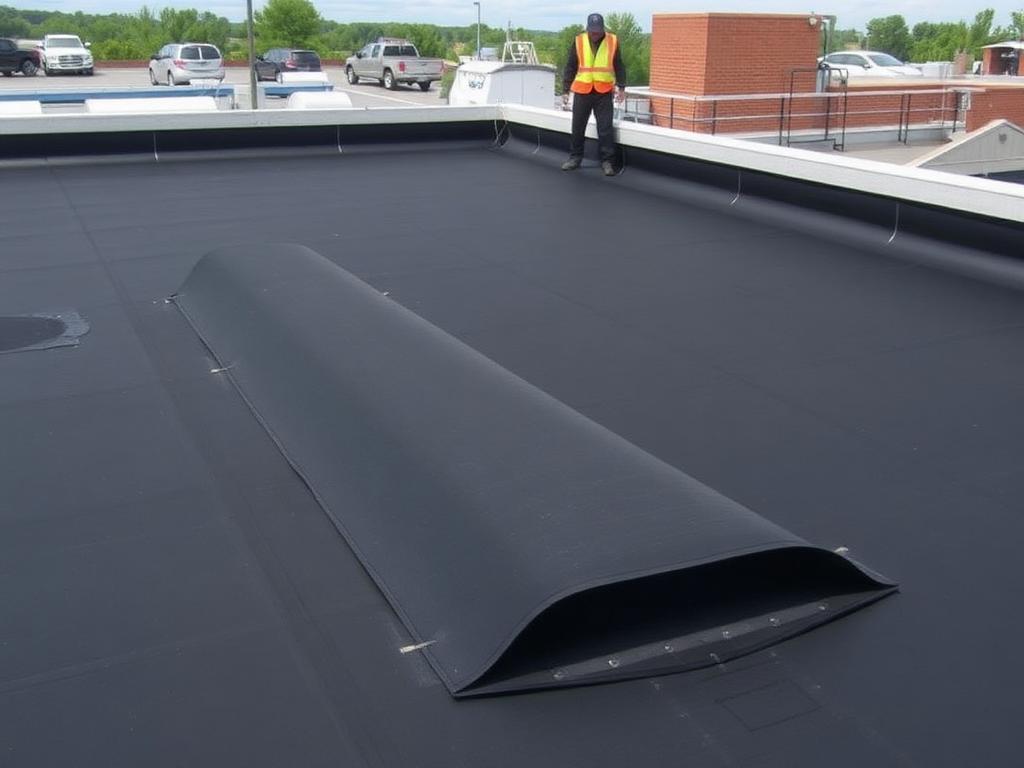
- EPDM — black or white rubber membrane, forgiving in cold, excellent for irregular residential shapes
- TPO — heat-welded seams and a reflective white surface that reduces summer heat gain
- Modified bitumen — multi-ply, tough underfoot, well suited to roofs with regular traffic
- Liquid-applied and coating systems — for restoring a sound existing roof
From the field
Drainage first, membrane second
Before we quote a membrane we look at where the water is supposed to go. If a low-slope roof ponds, replacing the membrane resets the clock but does not fix the cause — the new membrane will fail early in exactly the same spot.
Tapered insulation, a relocated or added drain, or a corrected scupper height is often the difference between a roof that lasts and one that gets replaced twice.
New Jersey winter and low-slope roofs
Snow load sits on a low-slope roof rather than sliding off. That matters for structure, and it matters for water: as the pile melts and refreezes at the perimeter, water backs up over the edge detail and finds any termination that is not fully sealed.
It is also why we do not leave debris in a drain sump going into winter — a blocked drain under two feet of snow is discovered by the ceiling, not by the owner.
Frequently asked questions
- How long does a flat roof last in New Jersey?
- A properly installed and drained single-ply system commonly performs for 20 years or more. A ponding roof will not, regardless of material.
- Can I put a deck or equipment on a flat roof?
- Only with proper protection. Foot traffic and equipment feet need walkway pads or sleepers; setting anything directly on a membrane cuts its life short quickly.
- Is a white membrane worth it?
- On a building with significant summer cooling load, yes — the surface temperature difference is substantial. On a small residential addition it matters much less.
Get a straight answer about your roof
Tell us what you're seeing and we'll inspect it, photograph it, and explain what it actually needs — repair or replacement.