Residential roofing · New Jersey
Residential Roofing in New Jersey
Most homeowners do not shop for a roofer until something forces the decision: a stain spreading across a ceiling, shingles in the driveway after a nor'easter, or a home inspector's report during a sale. Century Roofing works on all three situations, and the honest answer is usually narrower than what the internet suggests.
We are based at 80 Willow St in Carteret and work on houses throughout central and northern New Jersey — capes and colonials with steep slate-look shingle roofs, split-levels with low-slope rear additions, and multi-family properties where a single roof covers four different framing eras.
What residential roofing actually covers
A residential roof is a system, not a surface. Underneath the shingles there is decking, an underlayment layer, ice-and-water membrane at the vulnerable edges, metal flashing at every interruption, ventilation at the intake and exhaust, and drainage that carries water away from the fascia. When a roof fails early, one of those layers is almost always the reason — not the shingle brand.
That is why our first visit is a diagnosis rather than a sales pitch. We look at the attic as often as the roof surface, because the underside of the decking tells you where water has actually traveled and how long it has been happening.
- Full roof replacement with tear-off down to the deck
- Targeted repairs to flashing, valleys, vents, and shingle fields
- Low-slope sections over porches, dormers, and rear additions
- Ventilation corrections — intake, exhaust, and bath fan terminations
- Ice-and-water protection at eaves, valleys, and roof-to-wall transitions
- Gutter and drainage work where it affects the roof edge
What we inspect
What we look for during a residential inspection
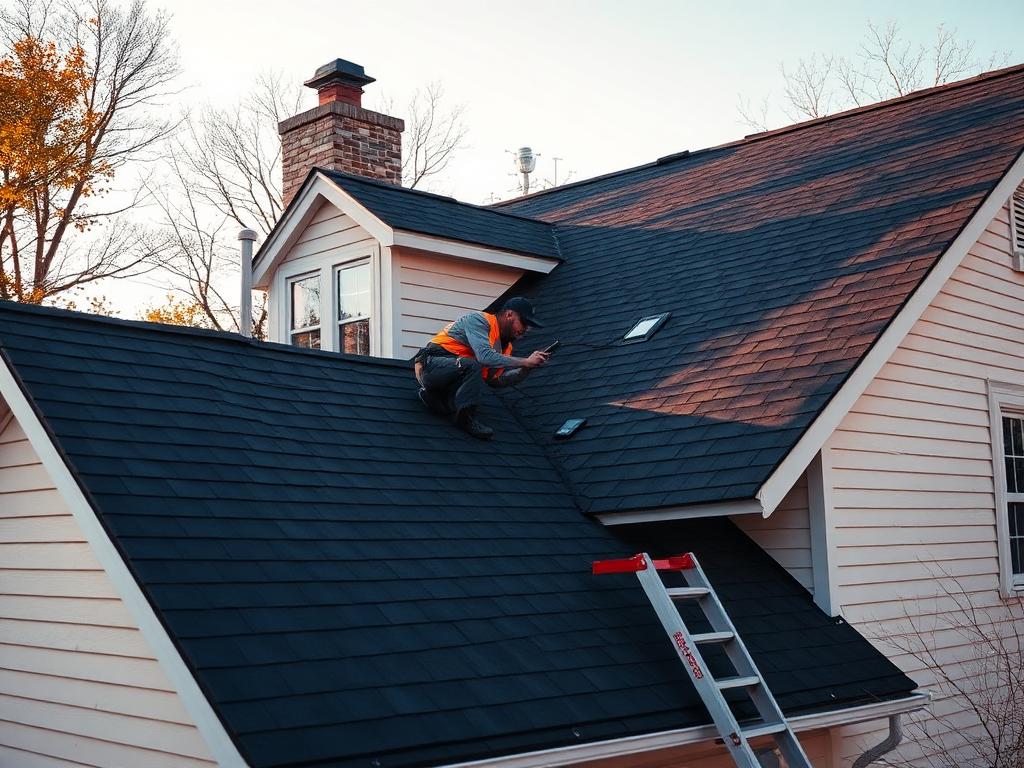
A quick look from the driveway will not find the cause of most leaks. The list below is the sequence our crews actually work through on a residential inspection.
- Attic decking for staining, delamination, and daylight at the ridge or eave
- Nail shiners and frost patterns that indicate a ventilation problem, not a leak
- Step and counter flashing at chimneys, dormers, and sidewalls
- Valley condition — open metal valleys versus woven shingle valleys
- Pipe boot rubber, which cracks long before the surrounding shingles wear out
- Granule loss in gutters, which tells you where the roof is aging fastest
- Fastener pattern and shingle uplift on the windward slopes
New Jersey conditions that shorten a roof's life
New Jersey puts a roof through a wider range than most states. A roof here sees hard freeze-thaw cycling from December through March, heavy spring rain driven sideways off the coast, and summer attic temperatures that can climb well past 130°F in an under-ventilated house.
Freeze-thaw is the one that quietly does the most damage. Water works into a hairline separation at a flashing joint, freezes overnight, widens the gap, and repeats. By the third or fourth winter the joint has opened enough to leak steadily during a March rain — and the homeowner assumes the storm caused it.
Repair, replace, or wait
Not every homeowner who calls us needs a new roof. When the shingle field still has flexibility, the granule loss is even, and the problem is isolated to a flashing detail or a handful of wind-lifted courses, a repair is the right answer and we say so.
The calculus shifts when the decking is soft in multiple areas, the roof has already been layered over, or the same slope has been repaired twice. At that point repairs stop being economical because you are paying for access — staging, tear-back, and disposal — over and over for the same slope.
What influences residential roofing cost
We do not publish prices, because a number without a roof attached to it is meaningless. These are the factors that actually move an estimate up or down.
- Roof size measured in squares, and how much of it is cut-up versus open field
- Pitch — anything above 8/12 requires additional staging and slows production
- Number of layers to be removed and disposed of
- Decking condition discovered after tear-off
- Penetration count: chimneys, skylights, vents, and dormers each need flashing
- Access — a tight urban lot with no dumpster placement costs more to work
- Material selection, from three-tab through heavy architectural and designer profiles
From the field
Roofing Pro Tip
If you see a ceiling stain that only appears during wind-driven rain and stays dry during a steady downpour, stop looking at the shingle field. That pattern almost always points to sidewall or chimney flashing, or to a siding detail above the roof line — water is being pushed horizontally into a joint that sheds fine under vertical rain.
Frequently asked questions
- How long does a residential roof replacement take?
- Most single-family homes in our service area are torn off and dried in the same day, with detail work and cleanup finishing the next. Larger or steeper roofs, or homes with several dormers and skylights, run three to four days.
- Do I have to remove the old roof?
- If there is already one layer and the decking is sound, a layover is sometimes permitted — but we generally advise against it. You lose the ability to inspect the deck, the new shingles telegraph the old surface, and the added weight and heat shorten the life of the new roof.
- Will you work with my insurance company?
- For storm-related damage we document conditions with photographs and written findings so you have what an adjuster needs. We do not negotiate claims on your behalf or promise a claim outcome.
- What happens if you find rotted decking?
- We show it to you before we cover it. Deck replacement is priced by the sheet and confirmed with you during the job rather than added silently to the final invoice.
Get a straight answer about your roof
Tell us what you're seeing and we'll inspect it, photograph it, and explain what it actually needs — repair or replacement.