Residential roofing · New Jersey
Roof Replacement in New Jersey
Replacing a roof is the one home project where nearly all of the value is buried under the part you can see. The shingle is the least differentiated component on the job; the underlayment strategy, the flashing details, and the ventilation balance are what determine whether the roof reaches its rated life.
This page explains how we sequence a replacement and what we will show you along the way.
Signs it is time to replace rather than repair
- The roof is at or past 20 years on a standard architectural shingle
- Shingles are brittle — they snap instead of bending when lifted
- Granule loss is heavy and even across slopes, not just below a valley
- Multiple soft or spongy areas underfoot indicating deck deterioration
- Repeat leaks in different locations rather than one recurring detail
- A previous layover that now hides the original deck condition
- Widespread nail pops or fastener backout across the field
Our replacement process, in order
- 1
Protection
Ground protection over landscaping, plywood against siding, tarps at walkouts, and dumpster placement agreed in advance.
- 2
Complete tear-off
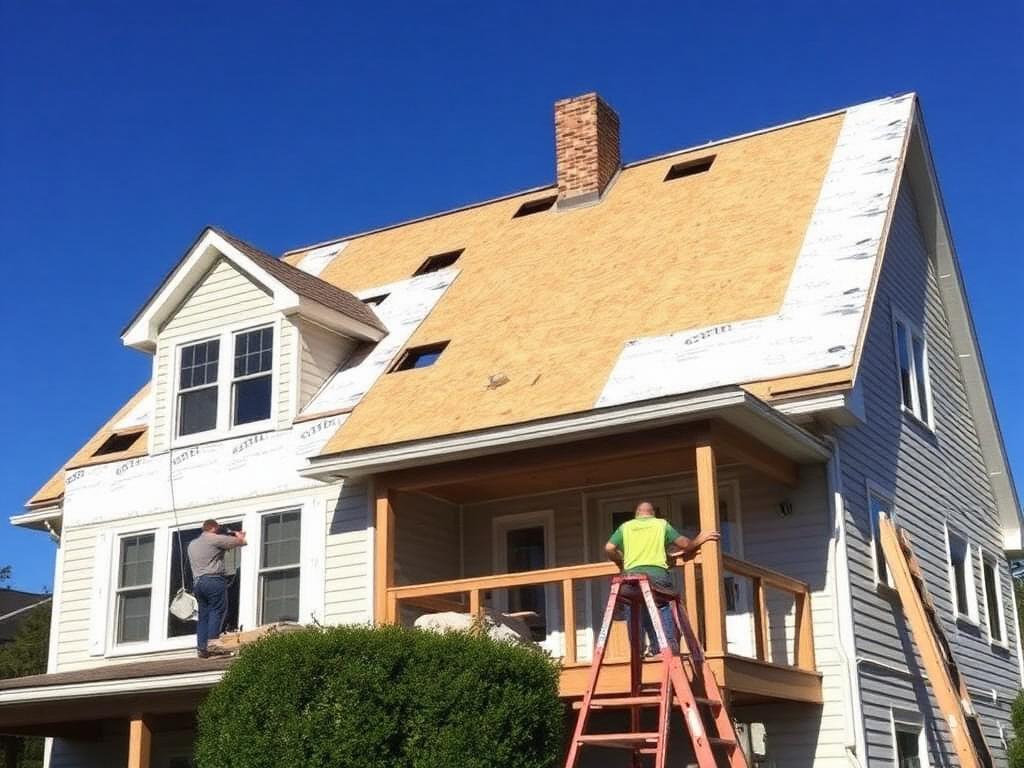
Down to bare decking on every slope. We do not layer over existing roofing on a replacement.
- 3
Deck inspection
Every sheet is walked and sounded. Damaged decking is photographed and shown to you before it is covered.
- 4
Ice-and-water membrane
At eaves, valleys, roof-to-wall transitions, and around every penetration.
- 5
Synthetic underlayment
Across the remaining field, mechanically fastened, lapped to shed water.
- 6
Metal work
New drip edge, new step and counter flashing, new pipe boots, new valley metal. Reusing old flashing is where roofs fail early.
- 7
Shingle installation
Manufacturer nailing pattern, correct exposure, starter course at eaves and rakes.
- 8
Ventilation
Ridge exhaust sized against verified intake so the attic actually moves air.
- 9
Cleanup and magnet sweep
Multiple passes around the full perimeter, including the street and lawn.
- 10
Final walkthrough
We go over the completed work and the photographs from the deck stage with you.
Materials we install
Most New Jersey homes end up on architectural asphalt shingles, and for good reason: the wind ratings are strong, the repair supply chain is reliable, and the price-to-life ratio is hard to beat. But the roof underneath the shingle is where we spend the specification effort.
- Architectural (dimensional) asphalt shingles in standard and heavyweight profiles
- Designer and impact-rated shingle lines where the home warrants it
- Self-adhered ice-and-water membrane at all vulnerable transitions
- Synthetic underlayment rather than felt across the field
- Aluminum and galvanized flashing, formed on site where the detail requires it
- Ridge vent, edge vent, and static venting depending on the attic configuration
What we inspect
What we found on this project
On tear-offs in older New Jersey housing stock we frequently uncover the same three things: 1x6 plank decking with gaps too wide for modern fastening, a previous layer installed over a deteriorated valley, and bath fans venting directly into the attic instead of through the roof. All three are fixable during a replacement and all three are far more expensive to address later.
Timeline factors
- Roof size and pitch — steeper roofs mean slower, safer production
- Weather windows; we do not tear off more than we can dry in the same day
- Deck replacement discovered after tear-off
- Chimney, skylight, and dormer count
- Material lead time on non-stock colors and designer lines
Frequently asked questions
- Do I need to leave the house during a roof replacement?
- No. It is loud and there is vibration, so people working from home or with young children often choose to be out for the tear-off day, but the house stays livable throughout.
- What do you do about the noise and debris inside the attic?
- Tear-off shakes loose decades of dust through decking gaps. If you store items in the attic, we recommend covering them; we can also cover them for you if access is straightforward.
- How is decking replacement handled?
- Bad sheets are photographed, shown to you, and priced by the sheet. Nothing gets buried without you seeing it first.
- What warranty applies to a new roof?
- You get the manufacturer's material warranty for the system installed, plus our written workmanship terms. Both are provided in writing with your estimate — we do not quote warranty lengths verbally.
Get a straight answer about your roof
Tell us what you're seeing and we'll inspect it, photograph it, and explain what it actually needs — repair or replacement.