Essex County · New Jersey
Roofing Contractor in Newark, New Jersey
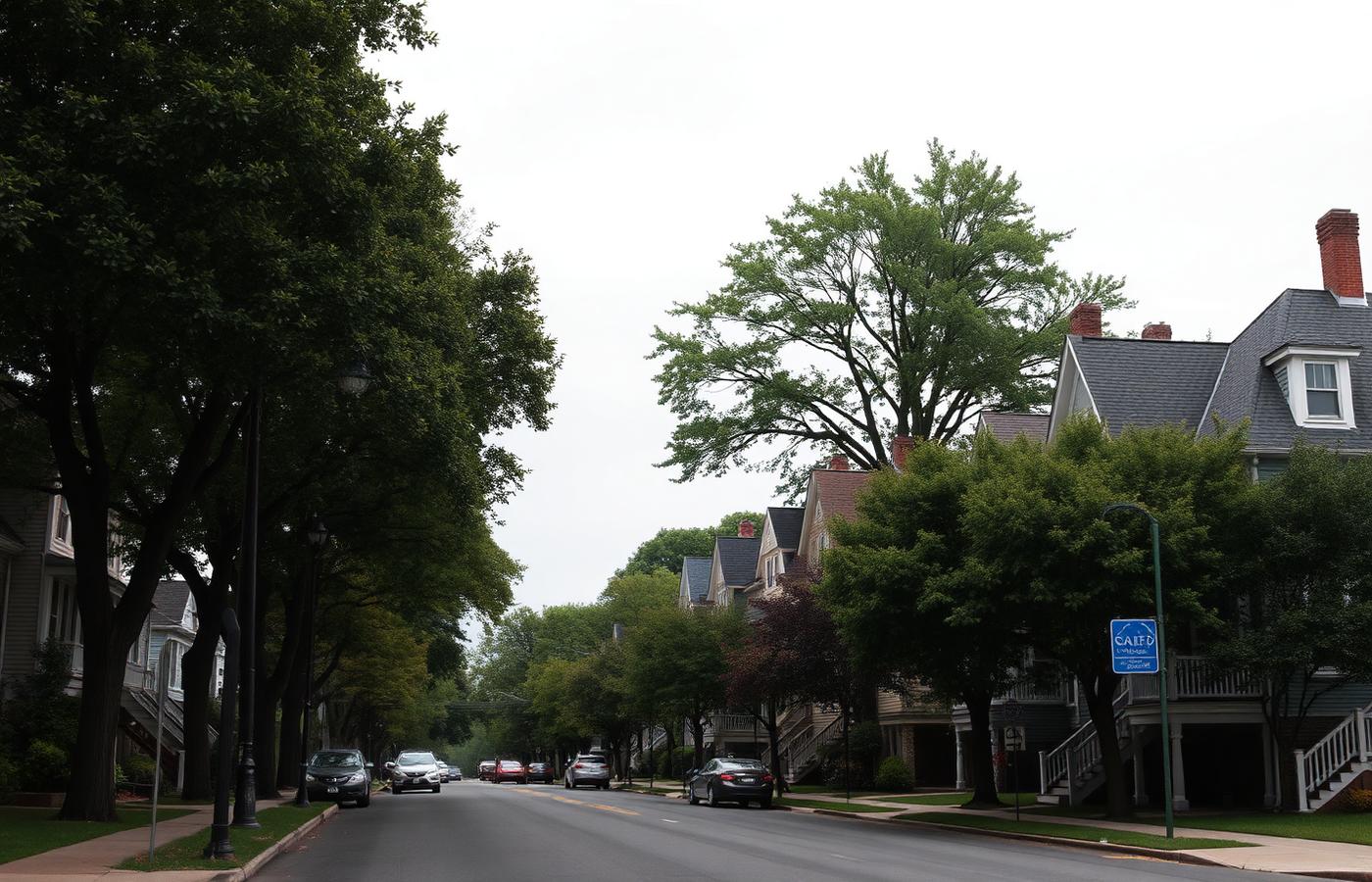
Newark is the largest city in the state and it has the widest range of roof types we work on: brick row houses in the Ironbound, multi-family buildings across the North and South Wards, and industrial and warehouse roofs near the port and airport.
Nearly all of it is low-slope, and nearly all of it fails at the same places — drainage, parapets, and penetrations.
Call (201) 682-1155Row houses and multi-family buildings
Ironbound row houses and the attached housing stock across the city carry flat roofs squeezed between parapet walls, often with the neighbor's roof at a different height on both sides.
The party-wall joint and the parapet cap are the two details that decide whether that roof stays dry. We tie the membrane up and over the parapet with proper termination and counterflashing rather than relying on sealant at the wall.
What we inspect
Industrial and warehouse roofs
The building stock near the port, Doremus Avenue, and the airport corridor runs to large single-ply and built-up roofs, many of them twenty years old or more and patched repeatedly.
On these we take core samples across the field before recommending anything. Dry cores mean a TPO recover is usually the better economics; wet cores mean a tear-off, and we say so rather than selling a recover that fails early.
From the field
Emergency leaks on occupied buildings
A leak in an occupied Newark building is rarely just a roofing problem — it hits tenants, inventory, or a ground-floor business the same day.
We answer emergency calls 24/7. The first visit stops the water: temporary membrane patching or tarping, photo documentation for insurance, and then a permanent repair scope you can act on.
What we do in Newark
- Modified bitumen and built-up roof replacement
- TPO and EPDM installation, recover, and repair on commercial buildings
- Parapet wall, coping, and counterflashing repair
- Roof drain, scupper, and internal drainage correction
- 24/7 emergency leak response and temporary weatherproofing
Frequently asked questions
- Do you handle commercial roofs in Newark?
- Yes. Warehouse, industrial, and multi-tenant commercial roofs are a large part of our Newark work — mostly TPO, EPDM, and modified bitumen.
- How fast can you respond to a leak in Newark?
- We take emergency calls 24/7 at (201) 682-1155 and prioritize active leaks in occupied buildings, usually the same day.
- My leak shows up along an interior wall, not the middle of the ceiling. Why?
- That pattern usually points to the parapet wall or coping rather than the roof field. Water gets behind the wall cap and travels down the inside face.
- Should I recover or tear off my warehouse roof?
- It depends on what the cores show. Dry insulation and a sound deck make a recover the cheaper, less disruptive option. Wet cores mean a tear-off is the only durable answer.
- Do you pull permits with the City of Newark?
- Yes. We file with the city, schedule the required inspection, and provide the closed-out paperwork.
Roofing services in Newark
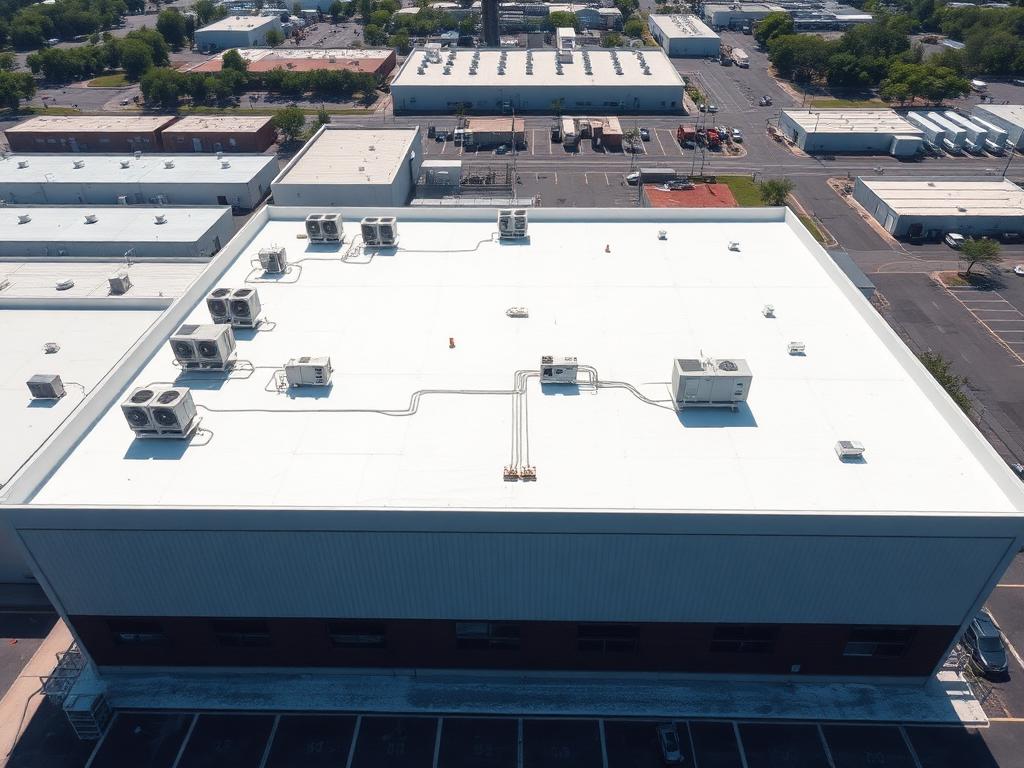 Commercial RoofingCommercial roofing is a different trade from residential work. The systems are low-slope rather than water-shedding, the failures start at details and terminations rather than in the field, and the building underneath usually cannot stop operating while you work on it.
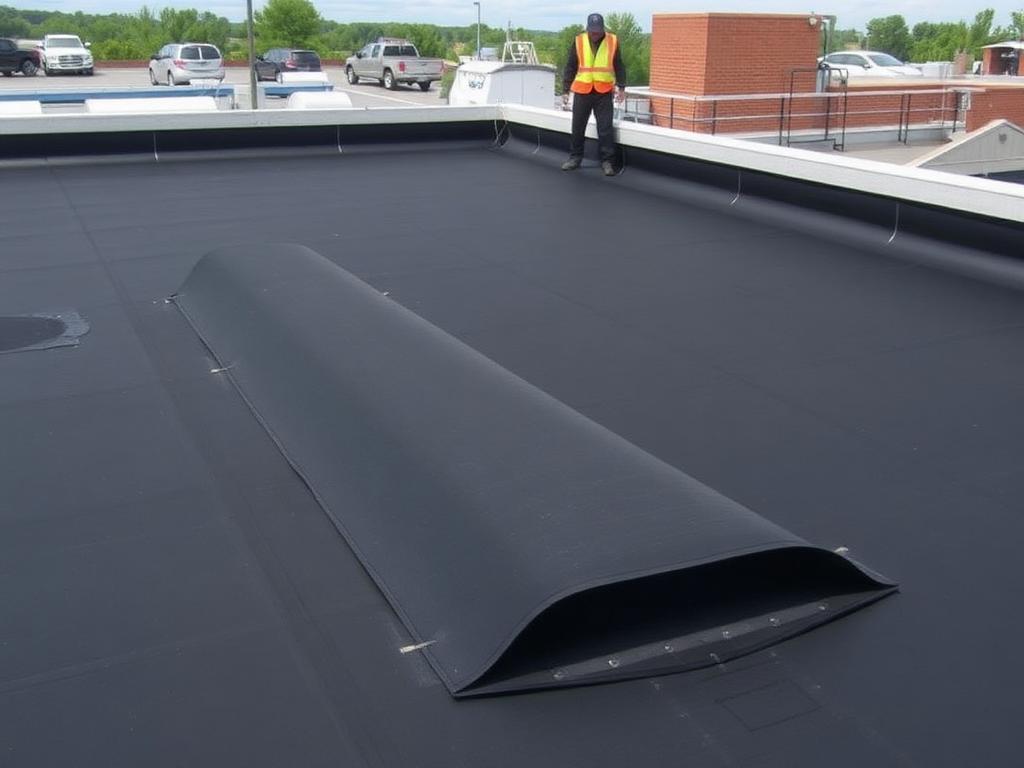 Flat Roofing'Flat' roofs are not flat. They are low-slope, and the entire performance of the system depends on that slope actually moving water to a drain within about 48 hours of a rain.
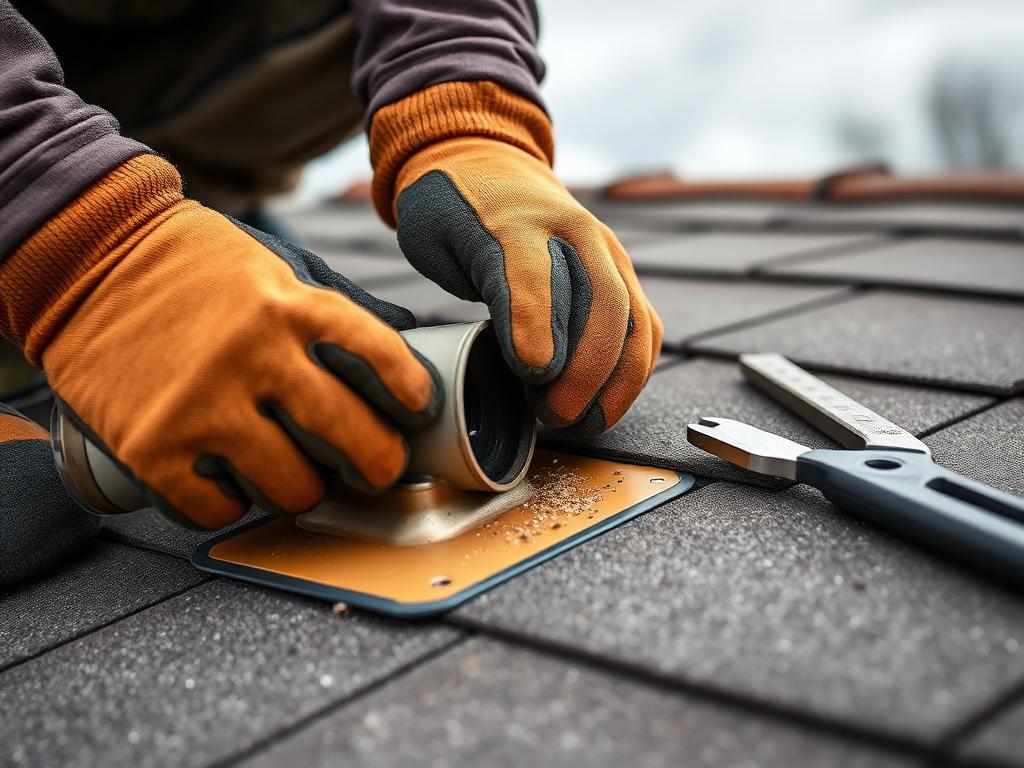 Emergency Roof RepairEmergency roofing is a two-stage job. Stage one stops water from entering the building tonight. Stage two fixes the roof properly once conditions allow. Anyone who tries to do both at once in the middle of a storm is doing neither well.
- EPDM RoofingEPDM has been on North American low-slope roofs since the 1960s, which means we know exactly how it ages. That track record is the main reason it is still specified on buildings where predictability matters more than novelty.
- Roof Leak RepairWater does not fall straight down inside a roof. It runs along the top of rafters, travels the underside of decking, follows a nail line, and drops through the ceiling wherever the path finally breaks — frequently several feet from where it got in, and sometimes on a different slope entirely.
Get a straight answer about your roof
Tell us what you're seeing and we'll inspect it, photograph it, and explain what it actually needs — repair or replacement.