
Commercial roofing · New Jersey
TPO Roofing in New Jersey
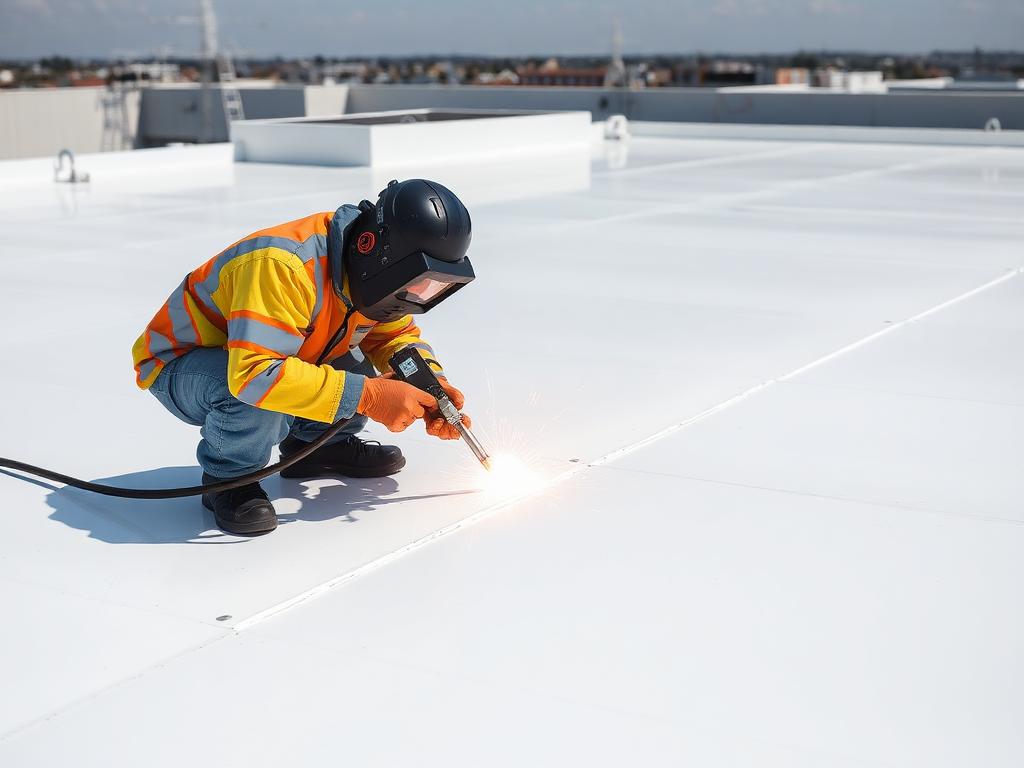
TPO's defining advantage is the seam. Instead of relying on adhesive, the sheets are heat-welded into a continuous bond that is effectively as strong as the membrane itself — provided the welder is set correctly and every weld is probed.
Why building owners choose TPO
- Hot-air welded seams rather than adhesive-dependent laps
- Reflective white surface that lowers summer roof temperature and cooling load
- Good chemical resistance, useful near kitchen and industrial exhaust
- Competitive installed cost for large open roof areas
- Repairs weld into the existing membrane rather than sitting on top of it
Watch out
TPO installation is a welding job
Everything that goes wrong with TPO in the first few years traces back to welding. Weld temperature has to be adjusted for ambient conditions and membrane age; a setting that produces a perfect weld at 70°F produces a cold, weak weld at 40°F.
Every seam should be probed with a hand tool after welding. A crew that does not probe seams is guessing, and the failure will not appear until the first freeze-thaw cycle pulls the cold weld apart.
Detail work
- Prefabricated corner and pipe boots welded in, not field-cut and sealed
- Termination bar with sealant at all wall and parapet terminations
- Coated metal edge and coping welded to the membrane
- Walkway pads at hatches, ladders, and around serviceable equipment
- Drain flashing welded to a target sheet and clamped properly at the bowl
Reflectivity in a New Jersey summer
On a black membrane, roof surface temperature on a July afternoon here can exceed 160°F. A reflective TPO surface runs dramatically cooler, which reduces cooling load and slows the thermal cycling that ages the membrane and the details.
The trade-off is winter: a reflective roof does not shed snow as quickly. On buildings where that matters we discuss it up front.
Frequently asked questions
- How long does TPO last?
- Modern TPO formulations with proper weld quality and drainage are performing well over the long term. Thickness matters — thicker membranes carry more of the UV-protective top layer above the scrim.
- Can TPO be installed over an existing roof?
- Over a dry, sound substrate with an appropriate cover board and where code allows, yes. Never over wet insulation.
- How are TPO leaks repaired?
- Cleaned, then a patch is heat-welded and probe-tested. It becomes part of the membrane rather than a patch sitting on it.
Get a straight answer about your roof
Tell us what you're seeing and we'll inspect it, photograph it, and explain what it actually needs — repair or replacement.